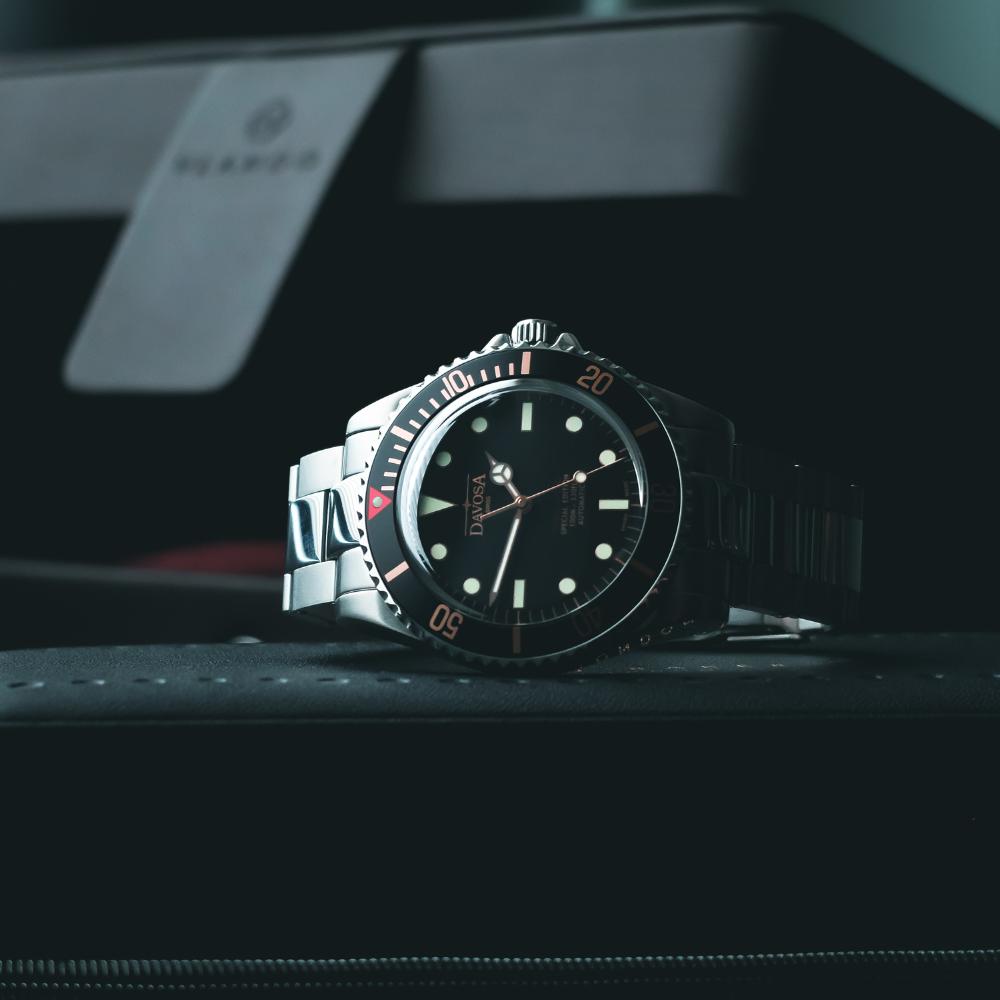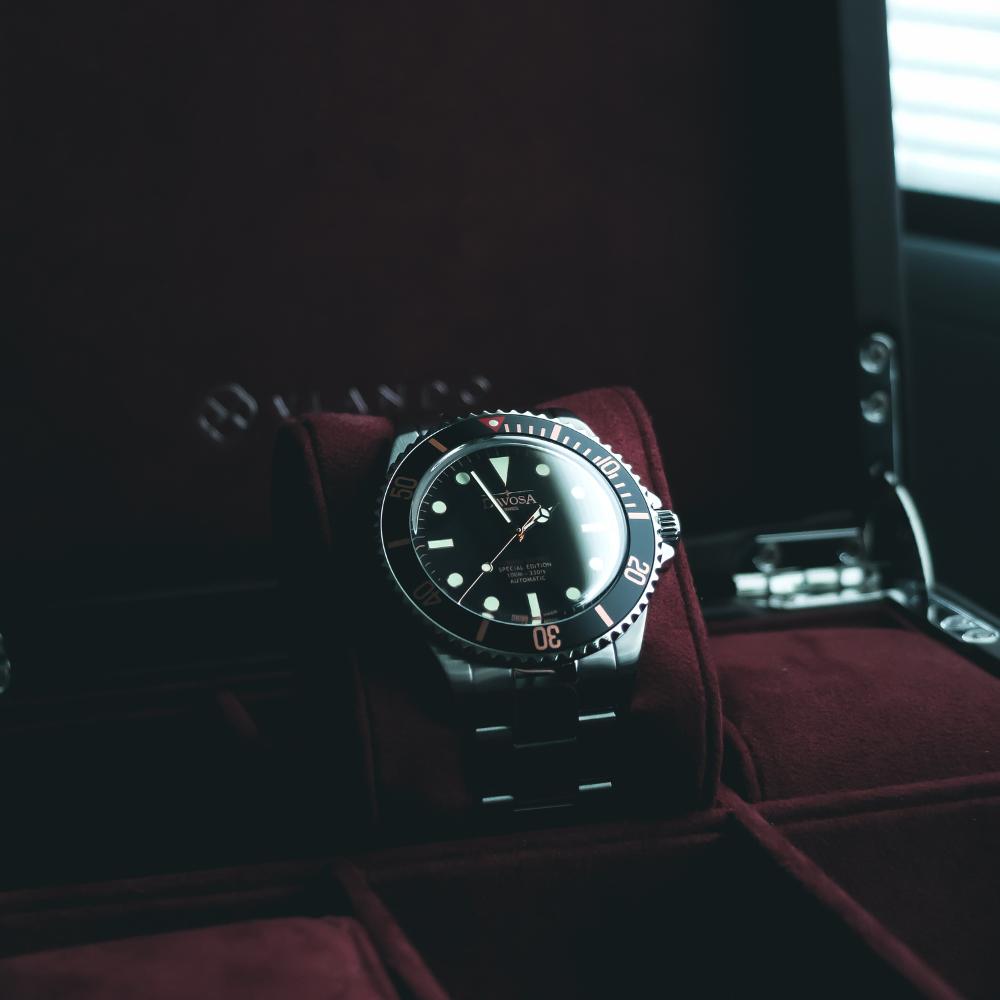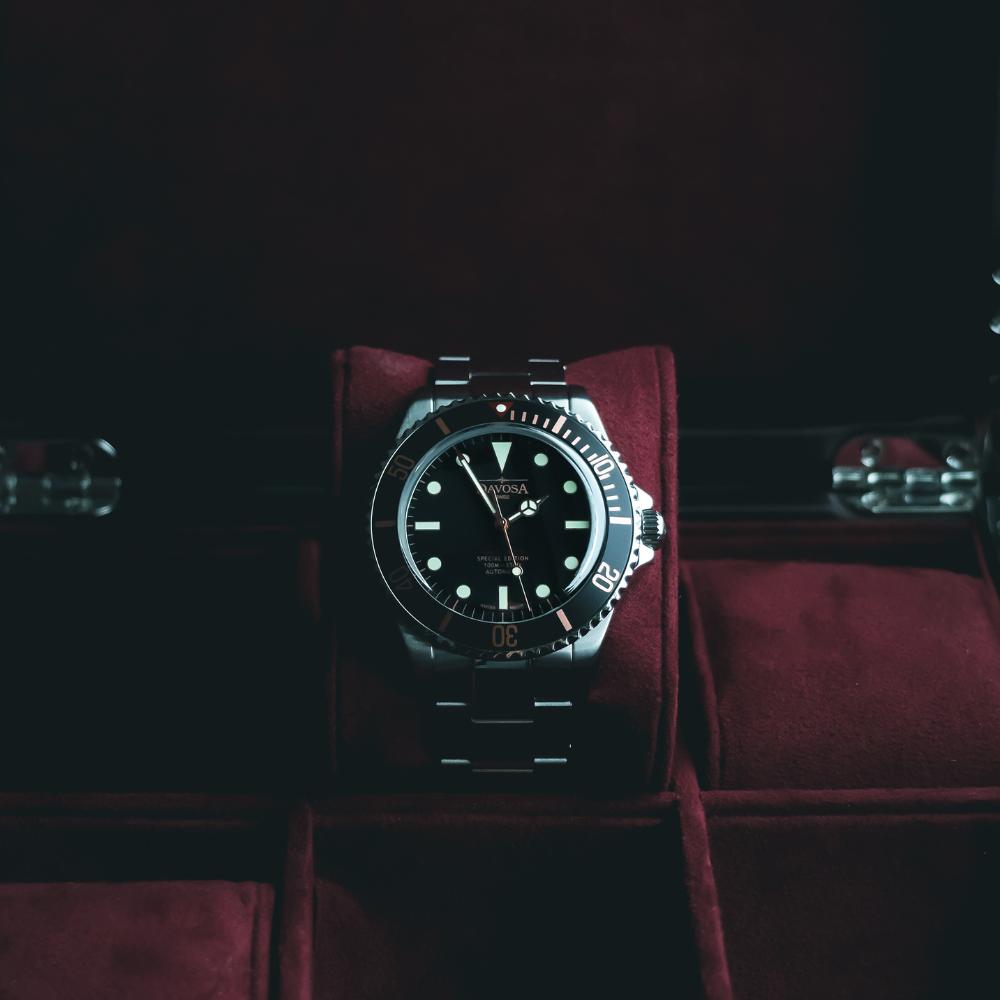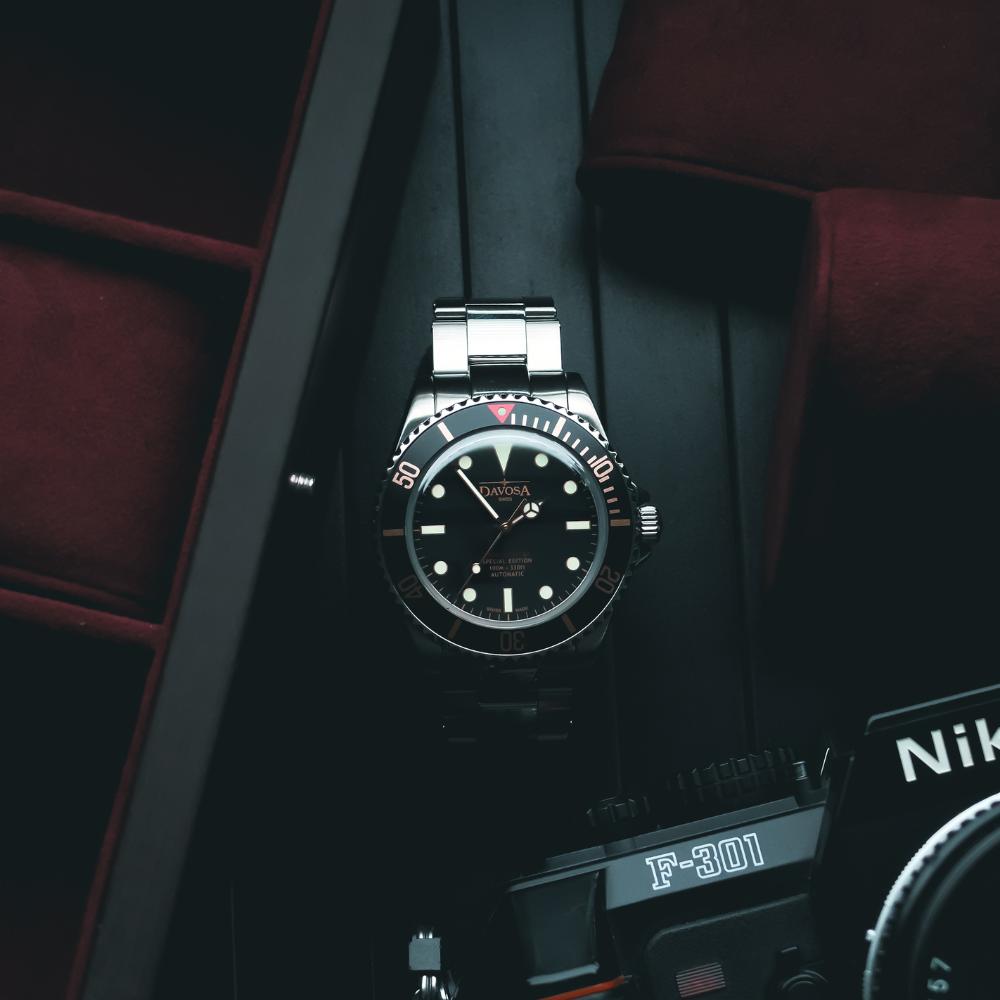


In the world of luxury horology, a timepiece is much more than a tool to check the hours - it is a statement of style, a marvel of mechanical engineering, and a functional companion for life. Among the various horological complications, one mechanism continues to capture the hearts of watch enthusiasts, collectors, and professionals alike:
The Chronograph.
Whether you are tracking laps on a racing circuit, timing a business pitch in New York, or admiring the sweeping seconds hand over a morning espresso, the chronograph represents the perfect intersection of sporty aesthetics and utility.
As part of our commitment to Swiss precision and the active lifestyle embodied by Davosa Swiss, we have crafted this comprehensive guide.
Read on to discover what a chronograph is, how it works, its advantages and drawbacks, and the essential rules to keep your timepiece performing flawlessly for decades.

What is a Chronograph Watch?
Simply put, a chronograph is a wristwatch equipped with a built-in stopwatch function. The term originates from the Greek words chronos (time) and graph (to write)- literally translating to a "time recorder."
Unlike standard watches, a chronograph allows you to measure elapsed intervals of time (seconds, minutes, and hours) independently of the regular timekeeping display.
This is achieved via dedicated push-pieces (pushers) typically located on the side of the watch case.
Key Features of a Chronograph Watch
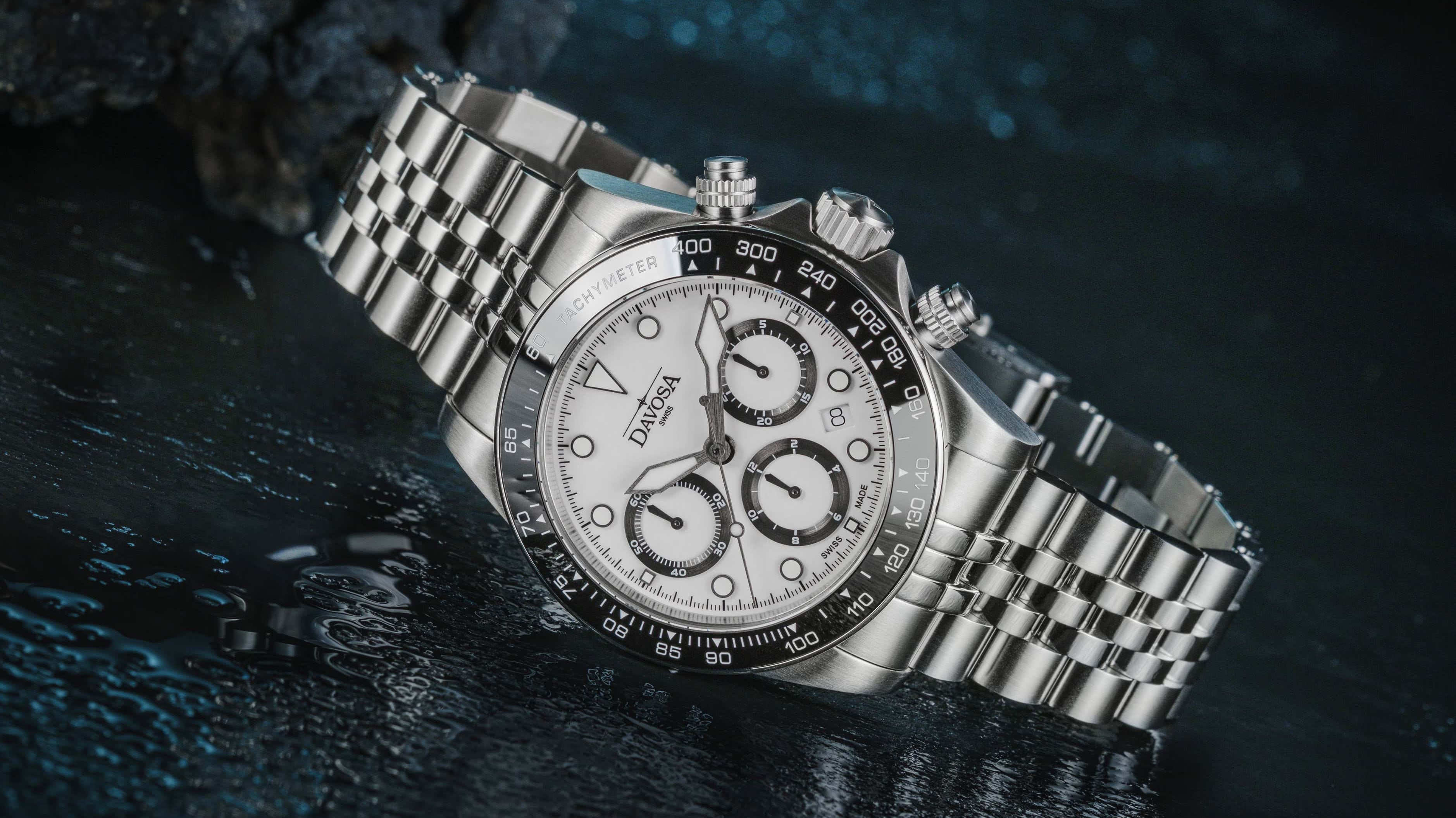
When looking at the dial of a premium chronograph - such as the Davosa Ternos Professional Chronograph or our dedicated pilot collections - you will instantly notice several distinct features:
1. Sub-Dials (Registers)
These are smaller mini-dials located within the main watch face. Most chronographs feature either a dual-register (two sub-dials) or triple-register (three sub-dials) layout:
-
Minutes Counter: Tracks elapsed minutes (often up to 30 or 60 minutes).
-
Hours Counter: Tracks elapsed hours (commonly up to 12 hours).
-
Running Seconds: Displays the continuous, standard ticking seconds of the watch. This ensures the central, large seconds hand can be reserved exclusively for the stopwatch function.
2. The Pushers
-
The Top Pusher (at 2 o’clock): Used to Start and Stop the chronograph measurement.
-
The Bottom Pusher (at 4 o’clock): Used to Reset the chronograph hands back to the zero position (12 o'clock) once the timer is stopped.
3. The Tachymeter Scale
Frequently engraved on the outer bezel or printed on the dial's perimeter, a tachymeter allows you to compute speed based on travel time over a fixed distance (e.g., calculating miles per hour over a measured mile).

The Pros and Cons of Chronograph Watches
Before investing in your next Swiss chronograph, it is essential to weigh the advantages against the inherent traits of this complex mechanism.
The Pros
-
High Functionality: From timing culinary creations to tracking gym intervals or billable professional hours, it is an incredibly versatile mechanical tool.
-
Commanding Visual Presence: The intricate dial, sub-dials, and side pushers give the watch a dynamic, sophisticated, and athletic appearance that stands out on any wrist.
-
Horological Value: A mechanical, automatic chronograph is an engineering masterpiece. The internal complexity (utilizing high-grade Swiss movements like the Valjoux 7750 or modified Sellita calibers found in Davosa timepieces) ensures excellent long-term value retention and collectability.
The Cons
-
Case Thickness and Weight: Due to the additional layers of gears, levers, and springs required for the stopwatch module, chronographs are generally thicker and heavier than minimalist dress watches.
-
Dial Legibility: For some, a dial packed with scales and sub-registers can appear cluttered at a glance. However, luxury manufacturers mitigate this by utilizing anti-reflective sapphire crystals and high-grade luminescent materials like SuperLumiNova®.
-
Maintenance Complexity: More moving parts mean a more intricate service process. Consequently, routine servicing for a mechanical chronograph is usually costlier than for a standard three-hand watch.

The Do’s and Don’ts: How to Properly Operate a Chronograph
To protect the delicate internal components from accidental damage, every watch owner must adhere to these golden rules of operation:
What to Do (Do’s):
-
Follow the Proper Sequence: Always operate the pushers in the strict order of Start $\rightarrow$ Stop $\rightarrow$ Reset. You must always stop the timing mechanism with the top pusher before pressing the bottom pusher to reset it.
-
Secure Screw-Down Pushers: If your chronograph is built for diving or extreme water resistance, it may feature screw-down collars on the pushers. Ensure these are completely screwed tight to the case before exposing the watch to water.
-
Wear It Actively: Built with premium 316L stainless steel, scratch-resistant sapphire crystals, and robust shock-absorption systems, modern chronographs are engineered to thrive alongside an active lifestyle.
What NOT to Do (Don’ts):
-
Never Press Reset While the Chronograph is Running: Forcing the reset pusher while the central timing hand is still in motion can bend or snap the delicate internal resetting cams and levers, leading to an expensive repair bill. (Note: This does not apply to specialized "Flyback" chronographs, which are specifically engineered for this).
-
Do Not Activate Pushers Underwater: Unless explicitly specified by the manufacturer for a particular professional diving model, pressing chronograph pushers submerged can break the rubber gaskets, drawing moisture directly into the movement.
-
Avoid Running the Chronograph Permanently: Some owners prefer seeing the large central seconds hand sweep constantly and leave the stopwatch running 24/7. This causes unnecessary wear on the chronograph clutch gears and significantly reduces the power reserve of an automatic watch (or drains a quartz battery prematurely).

Expert Maintenance Tips for Peak Performance
To ensure your chronograph performs with chronological precision for a lifetime and can be passed down to the next generation, practice these maintenance habits:
1. Regular, Gentle Cleaning
Sweat, salt, and dust can accumulate around the pushers and bracelet links over time. Wipe down your watch regularly with a soft microfiber cloth. If your watch has a verified screw-down crown and water-resistance rating, rinse it gently with lukewarm fresh water after swimming in the ocean or pool, then dry it immediately.
2. Guard Against Magnetic Fields
Laptops, smartphones, magnetic tablet covers, and audio speakers emit invisible magnetic fields. Exposure can magnetize the hairspring inside a mechanical watch, causing it to run heavily fast or slow. Keep your watch a few inches away from high-emission electronics when not on your wrist.
3. Keep the Lubricants Flowing
If your chronograph sits in a drawer or a safe for extended periods, the internal synthetic oils can slowly settle or dry out. Make it a habit to manually wind the watch and run the chronograph function for a few minutes at least once a month. This redistributes the lubricants evenly across the pivots and gears.
4. Adhere to Service Intervals
Just like a finely tuned European sports car, an automatic Swiss chronograph requires periodic professional maintenance. We recommend having your watch serviced every 3 to 5 years by an authorized service center. This process includes completely disassembling the movement, cleaning out old oils, re-lubricating, and replacing the water-resistance gaskets.

Final Thoughts: The Mark of a True Enthusiast
A chronograph watch is more than just a tool to measure time - it is a tribute to human ingenuity, history, and active style. When you select a Swiss-made chronograph from Davosa, you are investing in heritage, uncompromising build quality, and timeless design.
By respecting the mechanics, operating the pushers correctly, and keeping up with basic maintenance, your chronograph will serve as a reliable, high-performing partner through all of life's most critical moments.
Ready to find your next timepiece? Explore the curated digital showroom collection at Davosa USA to browse our iconic mechanical chronograph collections and join a global community of horological enthusiasts.